

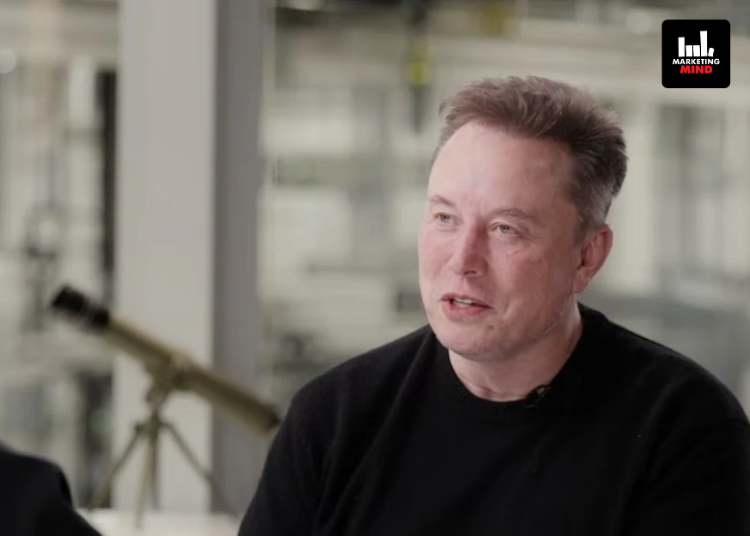
When Elon Musk joined Nikhil Kamath on People by WTF, the conversation quickly shifted from a podcast to a prophecy. Musk didn’t deal in predictions, he dealt in inevitabilities. “In the next 10 or 15 years, the advancements in AI and robotics will bring us to the point where working is optional,” he said, almost casually, as if announcing tomorrow’s weather. It was the kind of quote that doesn’t just land, it detonates.
For Musk, this future isn’t speculative. It’s engineering in progress. “AI and robotics are doing the things of AI and robotics,” he said with a shrug, meaning machines are already performing tasks humans once believed needed a human mind. And they’re doing them at a pace that’s only accelerating. He frames it simply: the world is heading toward a reality where human labour becomes a choice, not a requirement.
The impact on creativity, productivity, business, and culture, especially in the A&M industry, is enormous. With the rise of generative tools, Musk believes we’re entering an era where “AI is the biggest driver of productivity in human history.” He didn’t hedge that. He didn’t soften it. Productivity, he argued, is no longer a human trait, it’s becoming a computational one. Humans will be freed to create, ideate, and disrupt, while machines quietly take over the repetition and grind.
When Kamath pressed him on which companies are best positioned for this AI-first future, Musk didn’t hesitate. “Google is going to be pretty valuable,” he said, adding with equal emphasis, “Nvidia too, Nvidia is doing an incredible job powering this whole ecosystem.” He painted a picture of a market where the winners will be those who build intelligence, compute, and robotics, the pillars of the next decade’s infrastructure. The companies that master these will not just dominate industries; they’ll shape civilisation.
Musk lit up when the topic shifted to X. With disarming clarity, he said, “I like X because it’s the closest thing to a global town square.” To him, X isn’t a social network; it’s the world’s pulse, the one place where people, ideas, controversies, and global conversations collide in real time. For marketers and storytellers, this felt less like a platform insight and more like a cultural theory. If attention is the currency of modern marketing, X is the stock exchange.
He also spoke about branding through a lens few founders articulate. When Kamath asked him about the name SpaceX, Musk said he wanted something that felt inevitable, as if it already existed in the future. His brand philosophy is almost minimalist theology: names should say everything by saying very little. One letter. One idea. One mission. X. Tesla. SpaceX. Neuralink. They’re not brand names; they’re signals.
As the conversation deepened, Musk became almost philosophical about what lies ahead. He recalled that “AI and robotics are going to be very important,” a line that felt deceptively simple given its consequences. He envisions a world where AI surpasses human intelligence, robots exceed human physical limitations, and humanity evolves into a civilisation that partners with machines rather than competes against them.
This vision directly reshapes advertising and marketing. AI-led strategy. Automated creative production. Content that behaves more like a living organism than a campaign. Hyper-personalisation is so exact that traditional formats may become relics. Musk didn’t spell this out for the industry, but his quotes leave no ambiguity: the brands that survive will be the ones who collaborate with intelligence, not just use it.
With every quote, he wasn’t describing possibility, he was describing trajectory. And for anyone in the A&M industry, the message was clear as per him: the next era won’t be built by campaigns or content. It’ll be built by intelligence, human and artificial, moving in sync.