







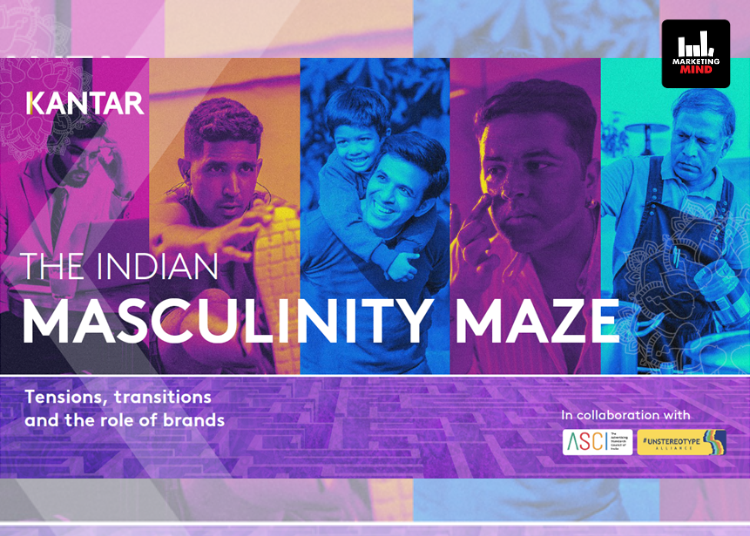
When was the last time you saw a man doing the dishes in an ad, without it being a joke or a one-off “Father’s Day special”? Exactly. If you’ve noticed that Indian advertisements still paint men as stern, stoic, and mostly out of the kitchen, you’re not alone. Kantar’s newly launched report, The Indian Masculinity Maze, has officially put numbers to the stereotype soup we’ve all been swimming in, and the results are eye-opening.
Men are changing. Ads aren’t
The study finds that a good 94% of Indian ads do not challenge traditional male roles, and only 1% show men in household or caregiving settings. This, at a time when real men, especially younger generations, are evolving, expressing more, and stepping into roles beyond just “the provider.”
While younger men, especially Gen Z and millennials, are embracing emotional openness and shifting gender roles, advertising continues to rely on outdated portrayals. Kantar’s findings reveal that 71% of men still agree with the belief that “real men don’t cry,” while many suppress emotions like fear, loneliness, and vulnerability, feelings rarely reflected in ads.
Nearly half of millennial and Gen Z men feel misrepresented in advertising, compared to fewer older men. The portrayal gap is further widened by the fact that only 6% of male characters show emotional care towards women, and 43% of ad voiceovers are still male, reinforcing traditional notions of male authority.
The report isn’t just calling out the problem, it’s showing why fixing it makes smart business sense too. According to Kantar’s LINK database, ads that break away from outdated male stereotypes and portray men with emotional depth see a 63-point boost in brand equity. And it’s not just about long-term impact, these ads are also 44% more likely to drive short-term sales.
Plus, brands that test their campaigns with more inclusive audiences, especially in categories like personal care and household products, tend to perform better across both men and women. In short, showing real men works, and it pays.
Gen Z men are tired of being misrepresented and they’re demanding change
The report also sheds light on Gen Z men, who are more emotionally expressive and open to fluid ideas of masculinity, but feel left out or misrepresented in advertising:
- Over 60% believe advertising overemphasizes confidence, control, and appearance.
- 48% feel grooming ads put too much pressure on appearance.
- 32% say parenting roles for men are underrepresented.
Despite their openness, Gen Z is often portrayed through narrow, surface-level lenses, missing a big opportunity for brands.
Manisha Kapoor, CEO and Secretary General of ASCI, echoed the importance of progressive male portrayals: “The Kantar report will help the industry move beyond superficial portrayals to understand not just the diverse realities of men today, but also to create positive representations of men that are in sync with reality.”
Soumya Mohanty, Managing Director & Chief Client Officer – South Asia, Insights Division, Kantar, said, “Most ads still rely on outdated male stereotypes, rarely showing men as emotionally present or involved at home. This widens the gap between reality and representation. But this isn’t just a cultural miss; it’s a commercial one.”
Prasanna Kumar, Executive Vice President, Insights Division at Kantar and co-author of the report, summed it up best, “This report isn’t about rewriting masculinity overnight. It’s about recognising where men are today, often caught between tradition and transition, and helping brands engage with that complexity in a way that’s both commercially smart and culturally sensitive.”